




Level 5 plaster Auckland
What is a Level 5 plaster finish?
Level 5 is the highest plasterboard finish in AS/NZS 2589, the Australian and New Zealand standard for gypsum linings: after the joints, corners and fixings are stopped, a thin skim of compound goes over the whole wall or ceiling, so board and joints share one texture and take paint the same way.
It is for surfaces where light will find every flaw: long walls beside big windows, walls and ceilings lit by downlights or skylights, dark colours and higher sheens. Tomar Contracting does Level 5 skim coating across greater Auckland, then paints the same walls, and we tell you plainly when a standard finish is enough.
Free site visit and written fixed quote · 0800 TOMAR C (866 272)
Level 5 vs GIB stopping
How is Level 5 different from standard GIB stopping?
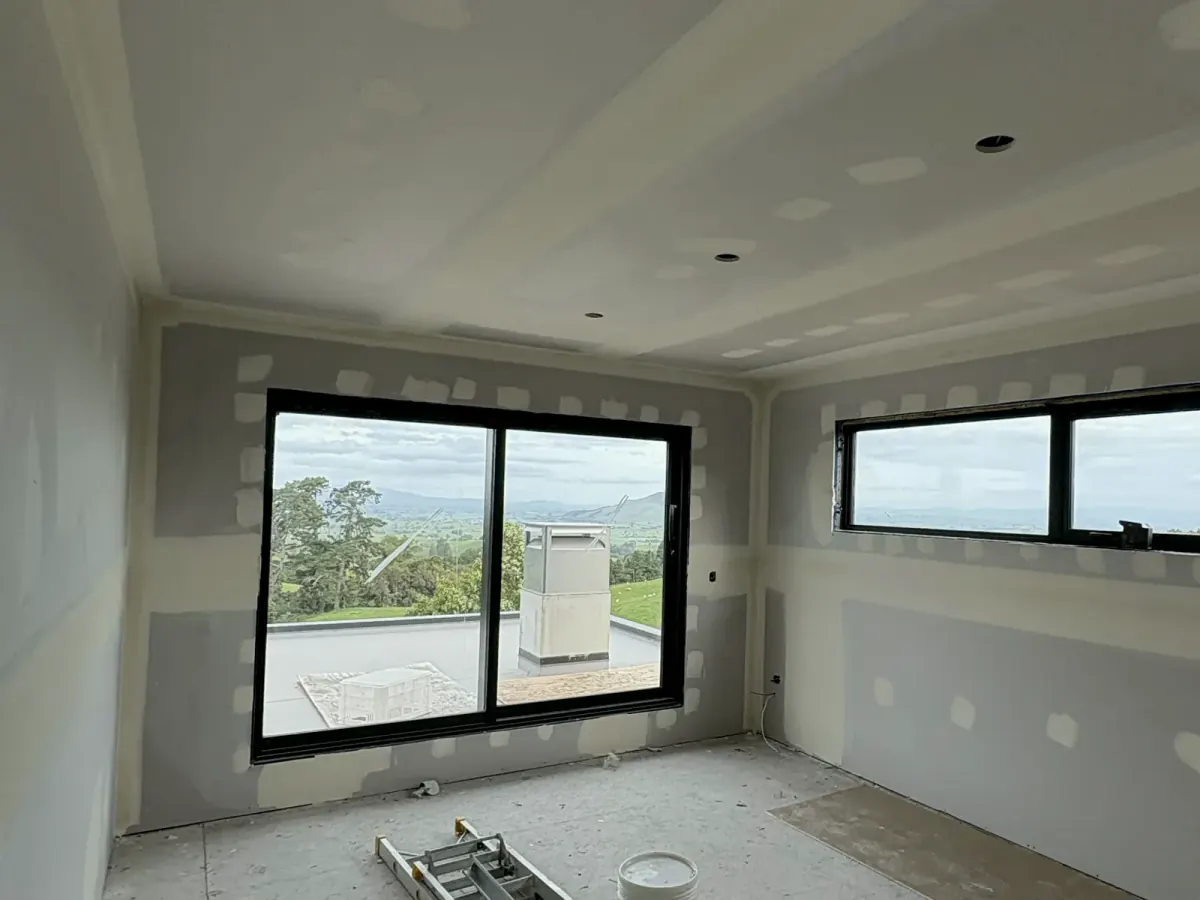
Standard GIB stopping (a Level 4 finish) fills and sands the joints, corners and fixings and leaves the rest of the board face as it is; Level 5 adds a skim over the entire surface on top of that stopping.
So Level 5 is an extra stage on good stopping, not a different trade. Level 4 is the usual finish for walls and ceilings in flat or low-sheen paint under ordinary light. Level 5 is for the walls where the small difference in texture between the paper face and the compound would show through the paint.
Our GIB stopping and plastering page covers the stopping stages, plaster repairs and new builds. This page covers the skim, and when it is worth paying for. For every plastering service in one place, see plasterers in Auckland.


Where it pays
When is Level 5 worth paying for?
Level 5 is worth it where strong light grazes across a large wall or ceiling; in a dim room finished in flat paint, the money is usually better spent elsewhere.
- Long walls beside full-height windows, sliding doors or skylights.
- Walls and ceilings with downlights or LED strips close to the surface.
- Dark or deep colours, and higher sheens on large walls.
- Showpiece walls in open-plan living, entries and stairwells.
- Walls where stripping wallpaper tore the paper face of the board.
Bedrooms, wardrobes, laundries and other low-light rooms in flat paint are usually fine at Level 4. We specify Level 5 room by room, not as a default on every wall. Offices and shops with big glazing often need it too; see commercial painting.
After wallpaper
Do you need Level 5 after wallpaper removal?
Often, but not always: it depends on how much the stripping damaged the paper face of the board and how much light the wall gets.
Patch repairs on a badly torn wall tend to show under side light, so when damage covers much of a wall, a full skim is usually the cleaner fix. When the paper comes away and leaves the board face sound, sealing and standard repairs may be all it needs.
In older villas and bungalows, such as those in Mount Eden and Remuera, the wall under the paper may be scrim over timber or old plaster rather than plasterboard, and may need relining rather than a skim, so we assess after the first wall is opened. Our wallpaper removal and wall repair guide covers stripping, testing and how to avoid surprise costs.
Call 0800 TOMAR C (866 272) · We reply within two business days
The process
How is a Level 5 skim coat applied?
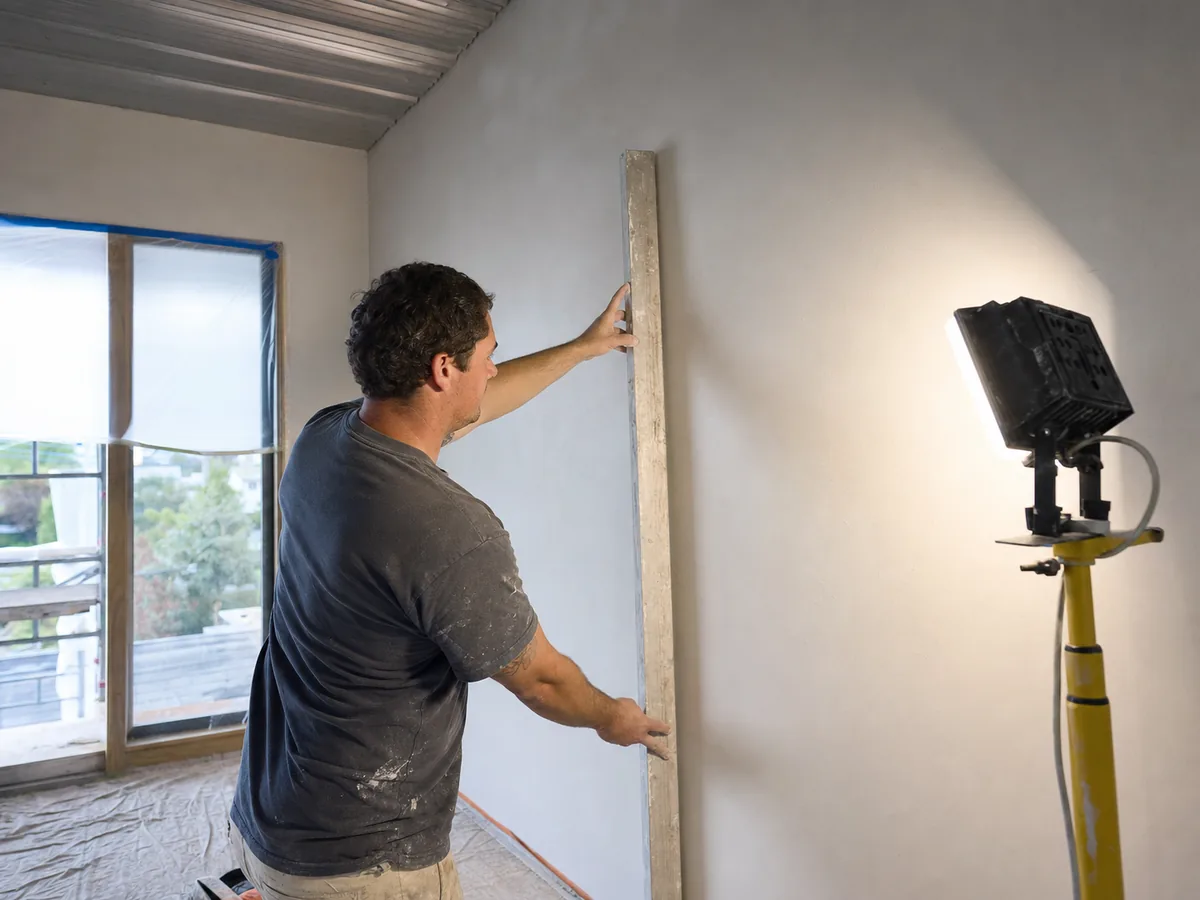
Thin coats of compound go over the whole surface once the stopping is flat, and each coat dries, is sanded and is checked with a light held across the wall; only then is the wall sealed and painted.
- Protect: floors, joinery and anything staying in the room, with dust control planned around who is living there.
- Check: the stopping must be flat and sound, because a skim cannot fix a proud fixing or a stepped joint.
- Skim: the whole surface, then let it dry fully.
- Sand and inspect: with dust control, then a work light held flat to the wall.
- Seal and paint: sealer first, then the finish coats.
We quote the skim and the interior painting together, so one team answers for the finished wall and nobody can blame another trade if a joint shows.
New builds and renovations
When should you decide on Level 5, and how long does it add?
Decide before the stopping starts, ideally once you know where the windows, skylights and downlights will be, and allow a few extra days in the programme for the skim.
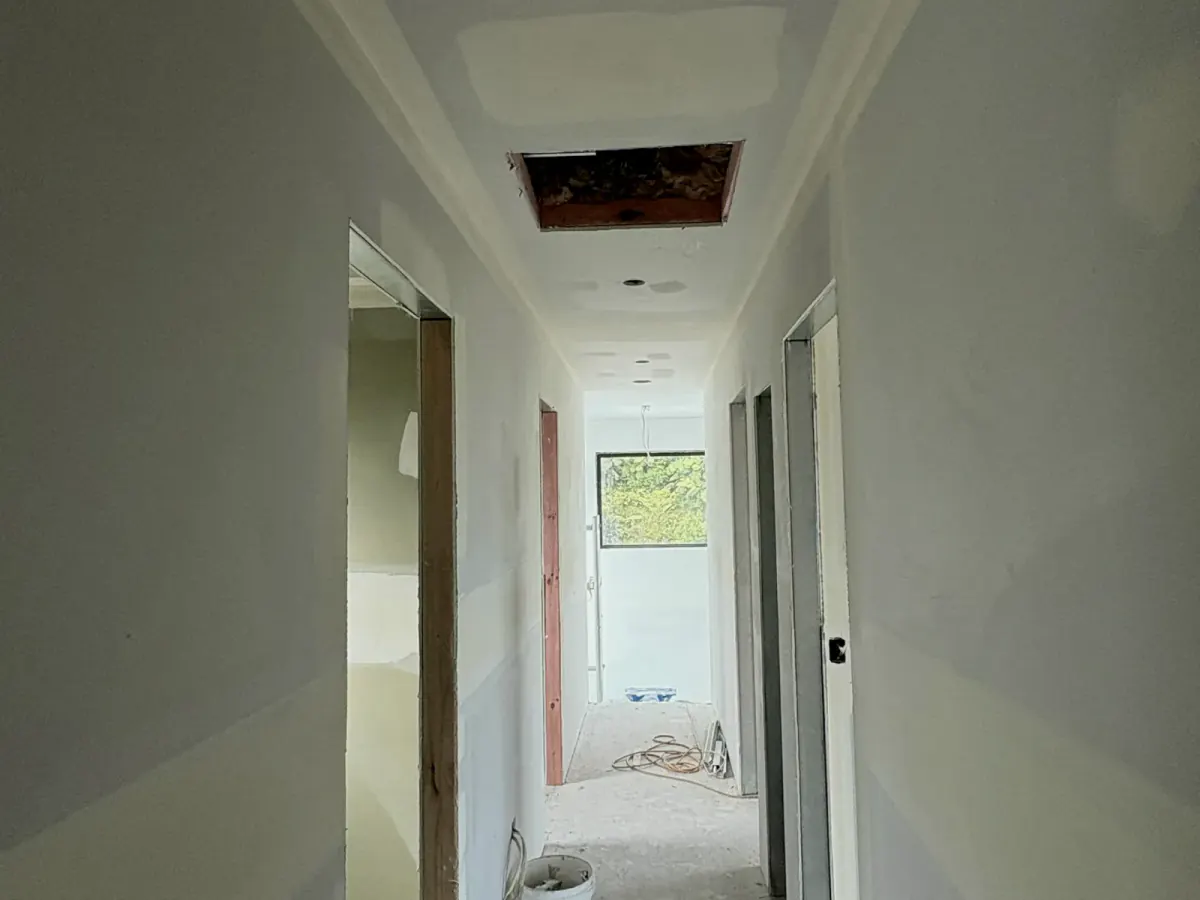
On a new build or extension, once the board is hung, we stop it, skim the walls that need it, seal and paint. Light position changes which walls need Level 5, so bring the lighting plan to the site visit.
Each skim coat usually needs to dry overnight or longer before it can be sanded, and longer again in cool, damp Auckland weather, which is why a skimmed room typically adds days rather than hours. Your written quote sets out the programme, so flooring, kitchen installs and move-in dates can be planned around it rather than rushing coats onto soft compound.
Paint on Level 5
What paint and sheen go on a Level 5 wall?
A sealer goes on first so the skim and board absorb paint evenly, then finish coats in a sheen chosen for the light in that room.
Level 5 gives you more freedom with sheen and deep colours, but a flatter finish still hides more. Tell us your sheen and colour before the skim is planned, because a higher sheen can move a wall from Level 4 to Level 5. We use Resene, Dulux and Wattyl paint systems, and your quote names the sealer, finish and number of coats for each area.
A sprayed topcoat does not make a wall Level 5; that is plaster work. See spray painting for where spray helps.
Price
How much does Level 5 plastering cost in Auckland?
We measure and price Level 5 work at a free site visit, because area, surface and access vary so much from job to job. For budgeting, our cost calculator gives a per-square-metre allowance for skim coating sound, already-stopped surfaces; the stopping underneath, the sealer and the paint are extra. What moves the price:
- Wall and ceiling area, and which rooms get Level 5 rather than a standard finish.
- The state of the surface: new board, wallpaper damage or old repairs.
- Ceiling heights, stairwells and access.
- Whether rooms are empty or lived in, and whether painting is part of the job.
You get a written fixed quote naming each room, its finish level, the preparation, products and coats. If stripping or demolition uncovers damage nobody could see at the visit, we show you and agree any change before doing it. Our work carries a 10-year workmanship warranty, and we reply to every enquiry within two business days. For typical ranges on the painting side, see what painting costs in Auckland.

Free site visit and written fixed quote · 0800 TOMAR C (866 272)
Straight answers
Level 5 plaster Auckland, FAQs
Open only what you need. These are the questions Auckland property owners ask before booking a site visit.
Need a quick answer? Call 0800 TOMAR C (866 272) or send a message.
Do all rooms need a Level 5 finish?
Rarely; see When is Level 5 worth paying for? above. For a borderline room, look along the wall when low sun comes in, or at night with a torch held flat to the surface. Joints, patches and fixings you can pick out in that side light are what a skim is meant to hide.
Will a Level 5 skim hide a bowed or uneven wall?
Not fully. A Level 5 skim is thin: it evens out texture and small hollows, but a bowed stud or a step between sheets has to be fixed first, sometimes by your builder. We point these out at the site visit.
Can you Level 5 just one feature wall?
Yes. We skim that wall corner to corner, so the change from skimmed to standard finish falls at a corner, where it will not show.
Do ceilings need Level 5 too?
Sometimes. Ceilings with skylights, long runs of downlights or a window wall along one edge can show joints as much as walls do, and are skimmed the same way. Most ceilings in ordinary light are fine at Level 4.
Can you skim coat over old painted walls?
Often, if the existing surface is sound. Loose or flaking paint and any wallpaper come off first, and the wall is cleaned, sanded and primed where needed so the skim bonds. In homes built before 1980, old paint may contain lead, so it is tested first and never dry-sanded. We check this at the site visit.
Can we live in the house during Level 5 work?
Usually, yes. We seal off the rooms being skimmed and clean up as we go, but sanding makes fine dust, so keep children, pets and anyone with asthma away from those rooms. Pre-1980 paint is tested for lead first (see above).
Is there a warranty on Level 5 work?
Yes. Our plastering and painting carry a 10-year workmanship warranty. Manufacturer product warranties are separate and confirmed with your quote.
Request Your Free Auckland Quote
Free, no-obligation site visit and a written fixed quote. We reply within two business days.
- Fully insured
- Site Safe trained
- 10-year workmanship warranty
- Free, no-obligation site visit