



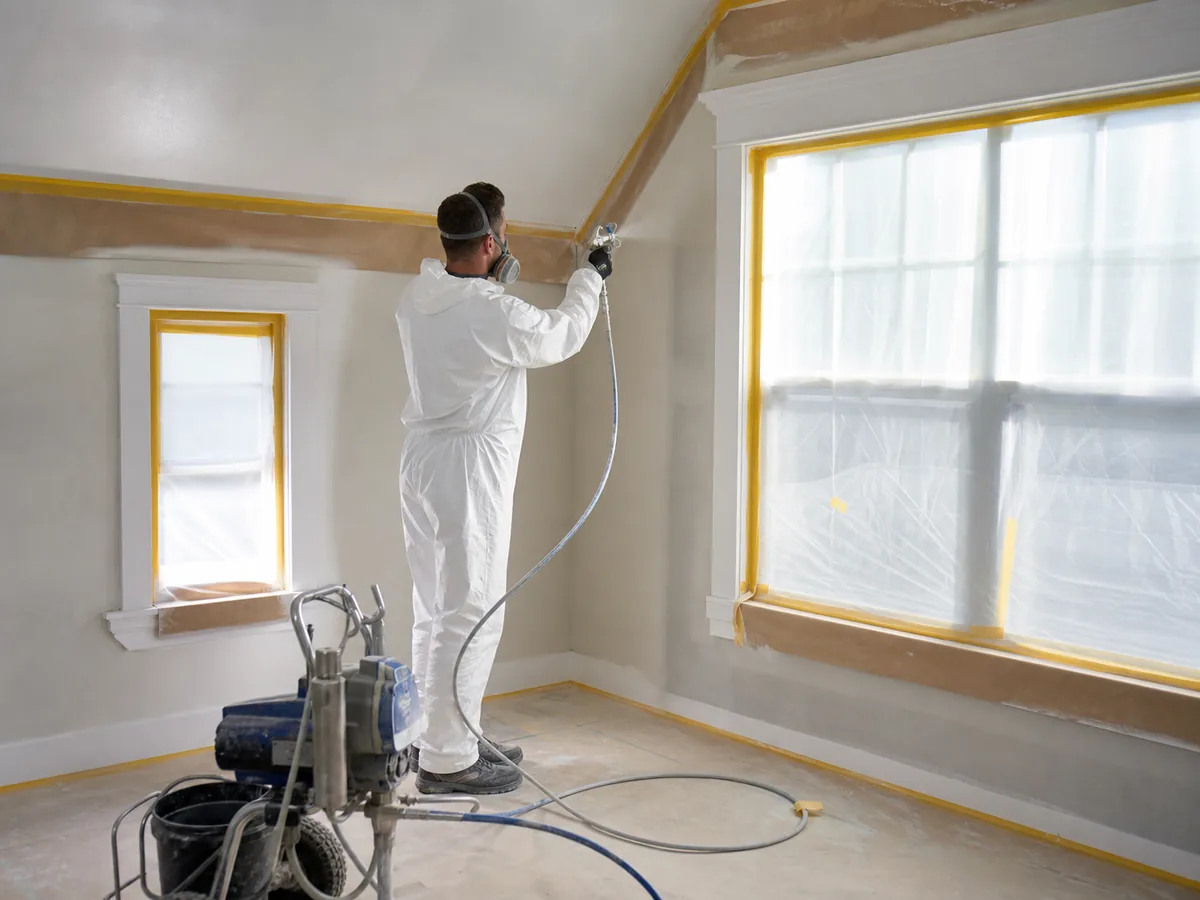
Spray painting Auckland
Is spray painting better than brush and roller?
On large, open surfaces with good prep and full masking, yes: an airless sprayer lays an even coat quickly, without roller texture or lap marks. On detailed joinery, windy exteriors or rooms that cannot be emptied, brush and roller often give the better result.
Tomar Contracting uses professional airless spray equipment across greater Auckland for ceilings, large walls, selected cladding and roof coatings, and combines spray with brush and roller where that finishes the job better. Choosing the method for each surface is part of the scope, not an afterthought.
Free site visit and written fixed quote · 0800 TOMAR C (866 272)
Where spray fits
Which surfaces suit spray painting?
Big, plain, repetitive surfaces suit spray best, because that is where an even coat and speed matter most.
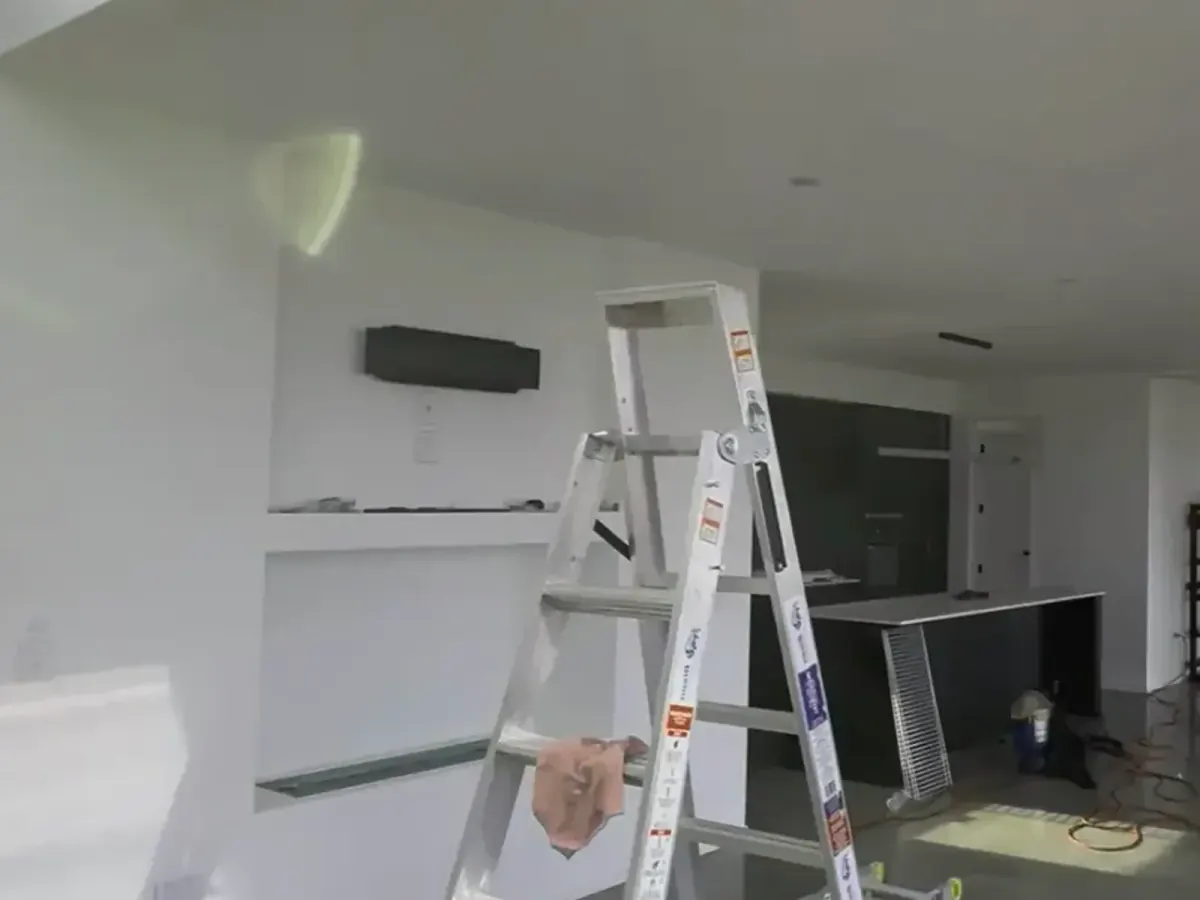
- Ceilings and long, open walls, especially in empty homes and new builds.
- Stairwells, corridors and lobbies in apartment and townhouse complexes.
- Offices, shops and warehouses, including steel framing and high ceilings; see commercial painting.
- Smooth plaster and panel cladding on the right day.
- Sound roofs, after washing, repairs and priming.
Spray lays paint on whatever is underneath, so it does not replace cleaning, repairs, sanding or primer.


Roofs
Is spray painting good for roofs?
Yes, on a roof that is still sound: once it is washed, repaired and primed, spray helps apply each coat at the even thickness the coating system is designed for.
Roof coatings are specified by the number of coats and the film thickness in the manufacturer's data sheets, and even application helps them stand up to Auckland sun and rain. Spray does not fix rust, cracked tiles or a roof that is past coating, so inspection comes first. See roof painting and restoration.
For what a roof restoration typically costs and what moves the price, see our roof painting guide.
Exteriors
Can you spray paint a house exterior in Auckland?
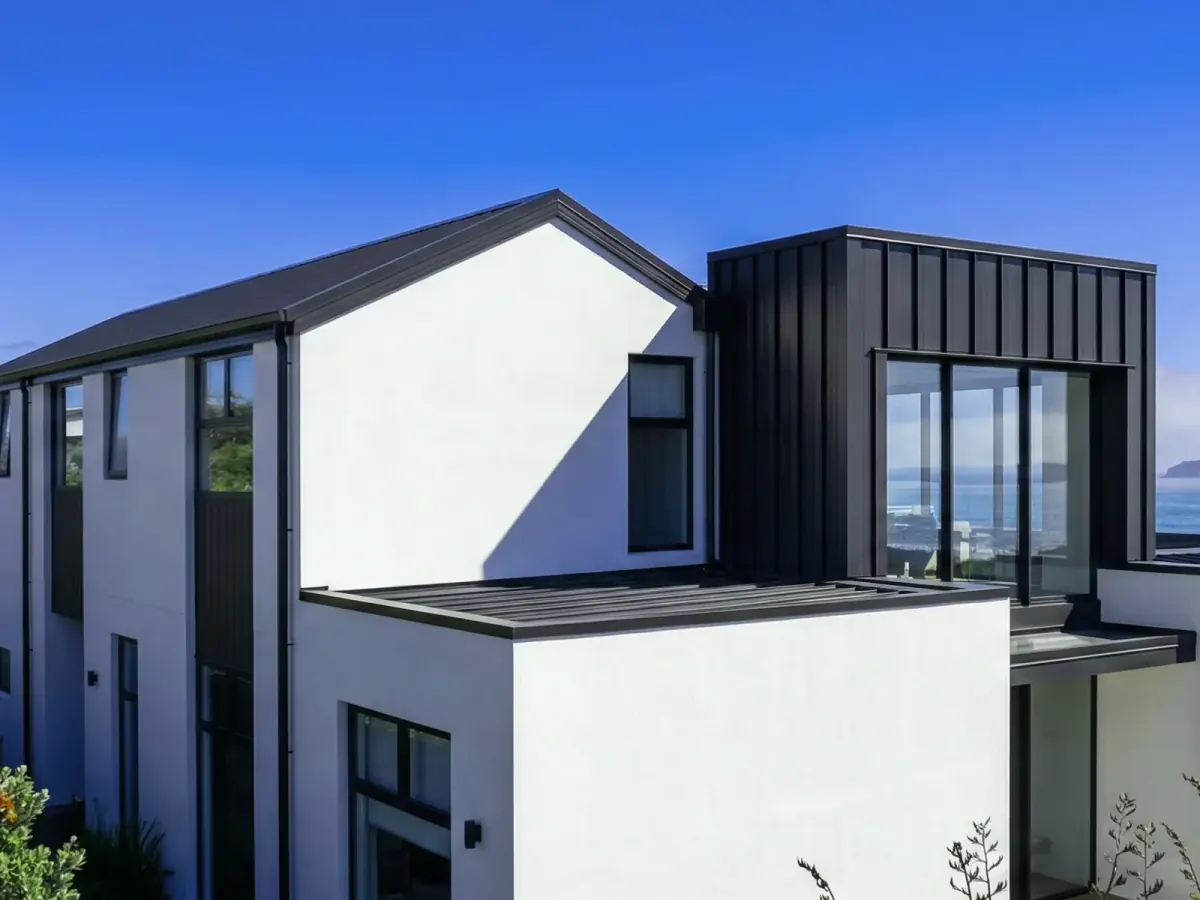
Yes, on the right cladding and on a calm, dry day: smooth plaster, monolithic and panel claddings are often sprayed, after windows, roofs, cars and neighbouring property are masked or moved.
Wind is the main limit. Beachfront and harbour-edge sections, in suburbs such as Takapuna, and exposed hilltop sites can be too gusty to spray safely, so we check the forecast and stop if paint will not stay on target. Salt spray also means washing down before coating; see coastal house painting.
On plaster and monolithic homes, cracks are repaired before any coat goes on, and spray can help lay thicker membrane coatings evenly. See painting plaster and monolithic homes.
Call 0800 TOMAR C (866 272) · We reply within two business days

Prep and masking
How much prep and masking does spray painting need?
More than roller work: the same cleaning, repairs, sanding and priming, plus full masking of everything that is not being painted.
Inside, that means floors, windows, joinery, fittings and switches. Outside, it means glazing, roofing, paths, gardens, cars and anything near the boundary. Masking takes real time, and it is written into the fixed quote after the site visit, not added later.
Airless equipment runs at high pressure, so operators wear respirators and eye protection and keep the work area clear while spraying. Our team is Site Safe trained.
Level 5 and spray
Does spray painting give a Level 5 finish?
No. Level 5 is a plaster finish, a skim over the whole wall, and spray is only a way of putting paint on top of it.
A sprayed coat has no roller texture, which suits walls under strong light, but it shows every joint the plastering left behind. We back-roll sprayed wall coats where that improves the look. On walls lit by big windows or downlights, get the plaster right first: see Level 5 skim coating and GIB stopping.

When we do not spray
When is brush and roller the better choice?
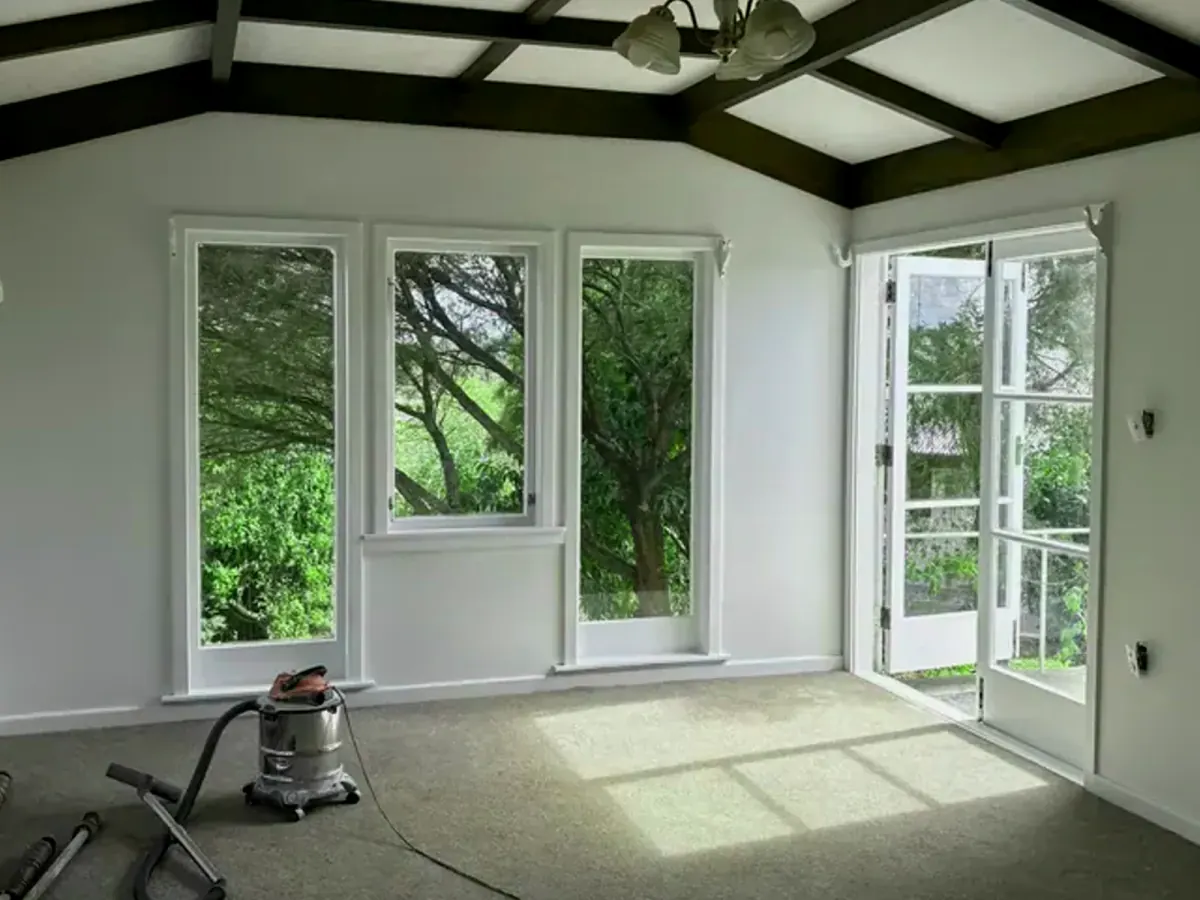
When the surface is detailed, the room is lived in, the wind is up or the surface is failing, brush and roller usually do the job better.
- Villa fretwork, sash windows and detailed trims, which are brush work; see villa painting.
- Furnished, lived-in rooms, where masking everything can take longer than rolling.
- Windy or exposed exteriors on the day, and anywhere overspray could reach neighbours.
- Flaking paint or a roof past coating, which need repair or replacement, not a fast coat.
Most jobs end up as a mix: spray for the big plain areas, brush and roller for cutting in and detail.
Quotes
How do you quote spray painting work?
After a free site visit, you get a written fixed quote that states where spray, brush or roller will be used, plus the prep, products, number of coats and protection.
Spray is a method, not a separate price list: the price comes from the surfaces, prep, masking and access. For typical ranges for interior and exterior repaints, see what painting costs in Auckland. We use Resene, Dulux and Wattyl paint systems, our work carries a 10-year workmanship warranty, and we reply to every enquiry within two business days.
Free site visit and written fixed quote · 0800 TOMAR C (866 272)
Straight answers
Spray painting Auckland, FAQs
Open only what you need. These are the questions Auckland property owners ask before booking a site visit.
Need a quick answer? Call 0800 TOMAR C (866 272) or send a message.
Is spray painting cheaper than rolling?
Not always. Spraying is faster on large open surfaces, but masking takes longer, so the saving shows mainly on empty buildings, new builds, ceilings and big plain walls. Your quote prices the method that suits each surface.
Does spraying use more paint?
Yes, usually noticeably more, because some paint is lost as overspray, and more again outdoors when there is any breeze. Your quote allows for the product needed to reach the specified number of coats.
Can you spray interiors while we live in the house?
Sometimes, room by room with full masking and agreed access. Furnished rooms are often better rolled, or sprayed while the house is empty. We plan this with you at quote stage.
How do you control overspray near neighbours and cars?
With masking, screening, wind checks and careful technique, and by asking neighbours to move cars when needed. If the wind picks up, we stop spraying or switch to roller.
Can a roof or exterior be sprayed any day?
No. Temperature, dew, rain and wind all decide, and the coating's data sheet sets the limits. We programme exterior spraying around the forecast and allow for weather days.
Which paints do you spray?
Resene, Dulux and Wattyl paint systems, chosen for the surface and exposure and named in your quote. Manufacturer product warranties are separate from our 10-year workmanship warranty and are confirmed with the quote.
Do you spray commercial and body corporate buildings?
Yes. Warehouses, offices, and the common areas of apartment and townhouse complexes are often good spray jobs, planned around access, trading hours and residents.
Request Your Free Auckland Quote
Free, no-obligation site visit and a written fixed quote. We reply within two business days.
- Fully insured
- Site Safe trained
- 10-year workmanship warranty
- Free, no-obligation site visit